

"We're Not Missing Anyone Anymore". How OpenApply Gave Woodland Star Eyes on Every Inquiry
Tigoni, Kenya


Rory Parkinson
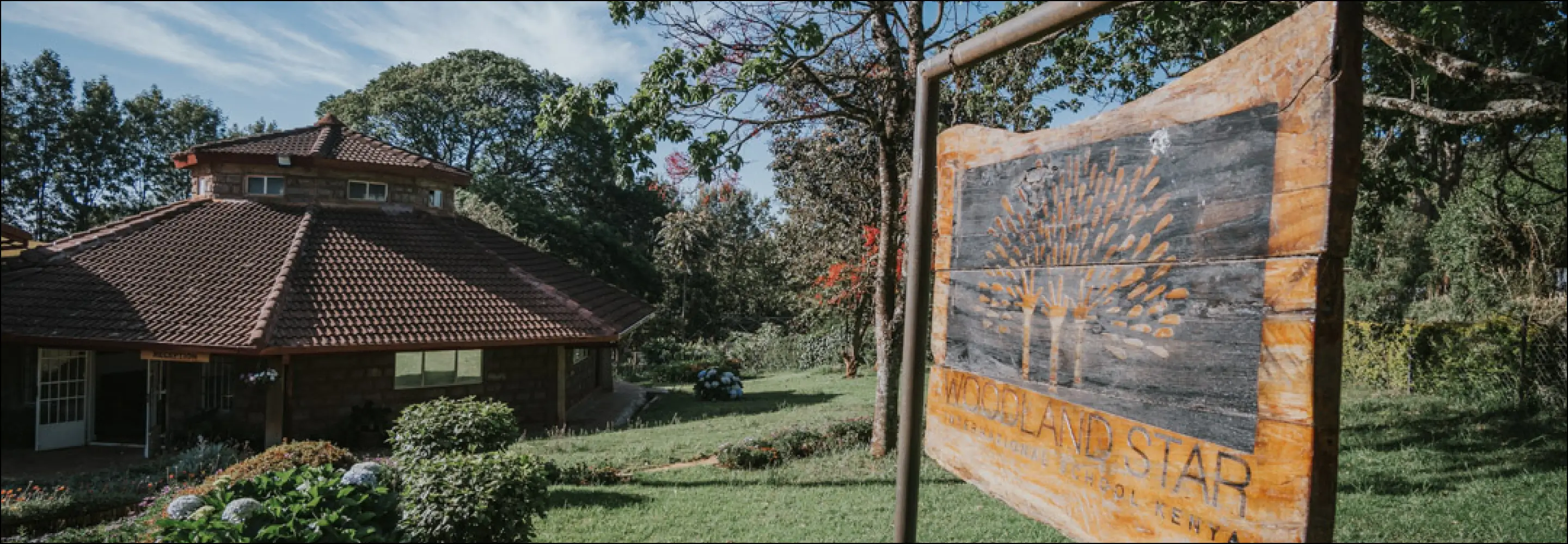
Founded in 2011 with just 17 students, Woodland Star International School now serves 134 learners from more than 25 nationalities on a 100-acre forest campus in Tigoni, Kenya. Its ethos is unmistakable: small classes, deep inclusion, and a guiding belief that every child should be seen, belong, and become globally mindful. By the time Rory Parkinson took over as Head of School in August 2025, the admissions process, which was still run from a spreadsheet, had outgrown the school it served.
When Rory Parkinson became Head at Woodland Star, he joined a school that had been doing extraordinary work with the tools it had. The admissions spreadsheet was, in his words, "cleverly set up", but it had reached the limits of what any spreadsheet can do.
"They did great. They set up a very clever spreadsheet. But spreadsheets are going to go so far really. The nature of your workflows just gets too cumbersome. You're bouncing between emails which are separate, so you haven't got eyes on the communication in and out with the various stakeholders. You're relying on a lot of data entry, and the complexity of that spreadsheet increases over time."
For a school whose entire identity is built on knowing each individual child’s strengths, challenges, and story, losing visibility of an inquiry became both an administrative misstep and an ethos problem.
As Rory commented, "It's just making sure we're not missing anyone. That's the biggest thing."
A Head Who Knows What Good Edtech Looks Like
Rory had seen the alternative before. As IT Director at the International School of Uganda, he had brought OpenApply into the school himself and watched what it did to the admissions function. Across Cognita's 110-school group and schools in Zimbabwe, Ukraine, and the UK, he had developed a clear view of what good edtech looks like, and what it doesn't.
"OpenApply has always caught my attention. I think it's the visibility. Whoever originally came up with the concept did really well in terms of the foundation of the structure of the software. It does what it says on the tin, and it does it well."
Rory offered an analogy, stating,
"Some products are BMWs, some are Ferraris. It depends on what you need. For admissions, OpenApply has that Ferrari feel. That level of precision and visibility you want when you're tracking every family from inquiry through to enrollment."
Within months of arriving at Woodland Star, he had moved the school off spreadsheets and onto OpenApply.
From Silos to Situational Awareness
The shift Rory describes most often isn't about product features. It's more about visibility. Before OpenApply, admissions information lived in fragments: rows on a spreadsheet, threads in inboxes, conversations in WhatsApp and Signal, paperwork in folders. No one person had the full picture, and the school was growing fast enough that the gaps were starting to show.
"All of a sudden, we've all got eyes on. We can dig in at any point and make sure we have access to the data we need to, and it's not getting lost."
OpenApply gave the team a single conduit. Inquiries, tours, applications, documents, communication history, all in one place, visible to whoever needed it. For Rory, that visibility extends beyond admissions itself. "It's not just for the admissions team. It's powerful from finance, through to HR, through to the person who hands out the supply lists. Everyone can see what they need to see."
That clarity changed how the leadership team operates. "If something gets dropped, we know where it's getting dropped. Was it finance forgetting to invoice? Was it a checklist item? You can see it."
Building Admissions as a Function, Not Just a Task
With OpenApply in place, Rory was able to restructure how admissions worked at Woodland Star altogether. Where the work had previously been spread across the senior leadership team - squeezed in around teaching, operations, and pastoral care - he repositioned a member of the team into a dedicated admissions role.
"For her, she's starting to take off in terms of maximising the software," Rory says. "And then for the senior leadership team, they're appreciating the situational awareness."
It's a change that small schools often struggle to justify: a dedicated admissions function only makes sense when the role can actually deliver value, and that's only possible with the right systems behind it. For Woodland Star, OpenApply made the case.
An Ethos of Inclusion, Built into the Workflow
Of all the ways OpenApply has changed how Woodland Star operates, the inclusion workflow is where the system most directly serves the school's identity. Woodland Star actively welcomes neurodiverse learners and gifted students with additional learning needs, which is a commitment that requires careful capacity planning and rich information from the moment a family makes contact.
"We use the auto-tagging system within OpenApply. One of the questions we ask is: does the student require additional support? If they do, it's tagged for our Head of Learning Support. She gets a flag in the system, can review the documents and data that have been uploaded, ask the parent for more if needed, all in one place."
The benefit is twofold. The Head of Learning Support has a single point of truth for every learner with additional needs, with all documentation, such as IEPs, educational reports, OT and speech assessments, alongside the application itself. And Rory, as Head, gets the strategic view he needs.
"There's always more need than capacity. That's where we get our waiting lists. I can look down, look at the tags, and get a quick read on where we are. We have to keep a ratio in each classroom with the resources we have available. For example, a maximum of two one-to-ones per grade. The system gives us that awareness very quickly."
Marketing, Measured
OpenApply's CRM and marketing functionality has also started to shape the school's outreach efforts, though Rory is candid that this is still new territory.
"We had an open day last term and I could see where the parents came from. We had 45 parents come through that particular campaign channel. From the day we implemented the system, I can now start picking up: it's mostly word of mouth - 55% - about 10% billboards, 9% social media on Instagram."
For a school that has historically relied on reputation and personal recommendation, that visibility is new. "As we look at our budget for the following year, we can say: this is what's working. That's pretty powerful."
The CRM is the next chapter. "We haven't fully harnessed it yet," Rory admits. "We've just touched the edge of it. But the potential is clear."
The Honest Middle: What's Been Hard
Any transition has friction, and Rory is refreshingly honest about Woodland Star's. Two themes stand out.
The first is the cultural shift away from email. "We're trying to move people away from direct email with potential parents and making sure that they're pushing it back through the system. Or if it's coming in a different channel like Instagram, Signal, copying that data onto the CRM so we're aware of where each family is."
The second is a lesson learned about re-enrolment. "On re-enrolment, we tried to capture too much data. We built out custom forms for medical information, passport bio pages, the rest of it. In hindsight, that slowed down our re-enrolment because some parents just thought: I haven't got time to do that right now. We're learning as we use it."
It’s important to note that OpenApply hasn't magically solved admissions at Woodland Star; it's given the team a much better foundation to build from, and the team is learning what to ask, when, and from whom.
The Time Piece
Asked to put numbers on the time saved, Rory is careful, and credible, in his estimate. "It depends on the role. For the admissions officer, potentially up to 10 hours a week. For the senior leadership team, probably a couple of hours each. If we were a larger school, that ratio would increase."
But for him, the headline isn't hours saved. It's information managed.
"The challenge in the modern age is the quantity of information that hits us in all our lives and all our roles. That's where it shines. You can get the data at a level, dig deeper if you want more, and if something gets dropped, you know where."
A Partnership, Not a Transaction
One theme that surfaced repeatedly in conversation with Rory was how the relationship with Faria had felt, particularly given Woodland Star's size.
"We're not the biggest school," he says, with characteristic directness. "But I feel equally valued.”
He continues: "It's a small world. When people talk to me and ask about solutions, I can say: this [Faria] is a great company. They're genuine. Not just out to make money from you. I felt very valued and honoured through the process."
For Rory, that pragmatism is what made the project possible at Woodland Star's size. And it's what makes him an advocate for OpenApply when other heads ask.
What's Next
Rory is clear that Woodland Star is still early in its OpenApply journey. The foundations are in. The team is finding its rhythm. But there's a roadmap.
"CRM is one of the next big chapters for us. How we harness it, set up our campaigns, make sure that data is useful. Then the automation piece. And we'll be looking at our ecosystem more broadly over time."
For other heads considering OpenApply, Rory’s advice is grounded….
"Do a baseline of where you are. What are your workflows? What are you using? Look at the wider ecosystem you're already in. Talk to other schools your size who use it. Engage with the team. Find out what pain points it'll solve and what it brings to the table. And then make a call."
"It's Just Making Sure We're Not Missing Anyone"
When asked what advice he'd give another head choosing a system like OpenApply, Rory returned to the line he keeps coming back to throughout the conversation. "I'd just say: situational awareness. Make sure you're not missing anyone."
It's a sentence that says as much about Woodland Star as it does about OpenApply. In a school built on the conviction that every child should be seen, the admissions system has become one of the subtle ways that promise is kept.
To learn more about OpenApply or to explore its features in more detail, schedule a demo with one of our friendly experts today.