

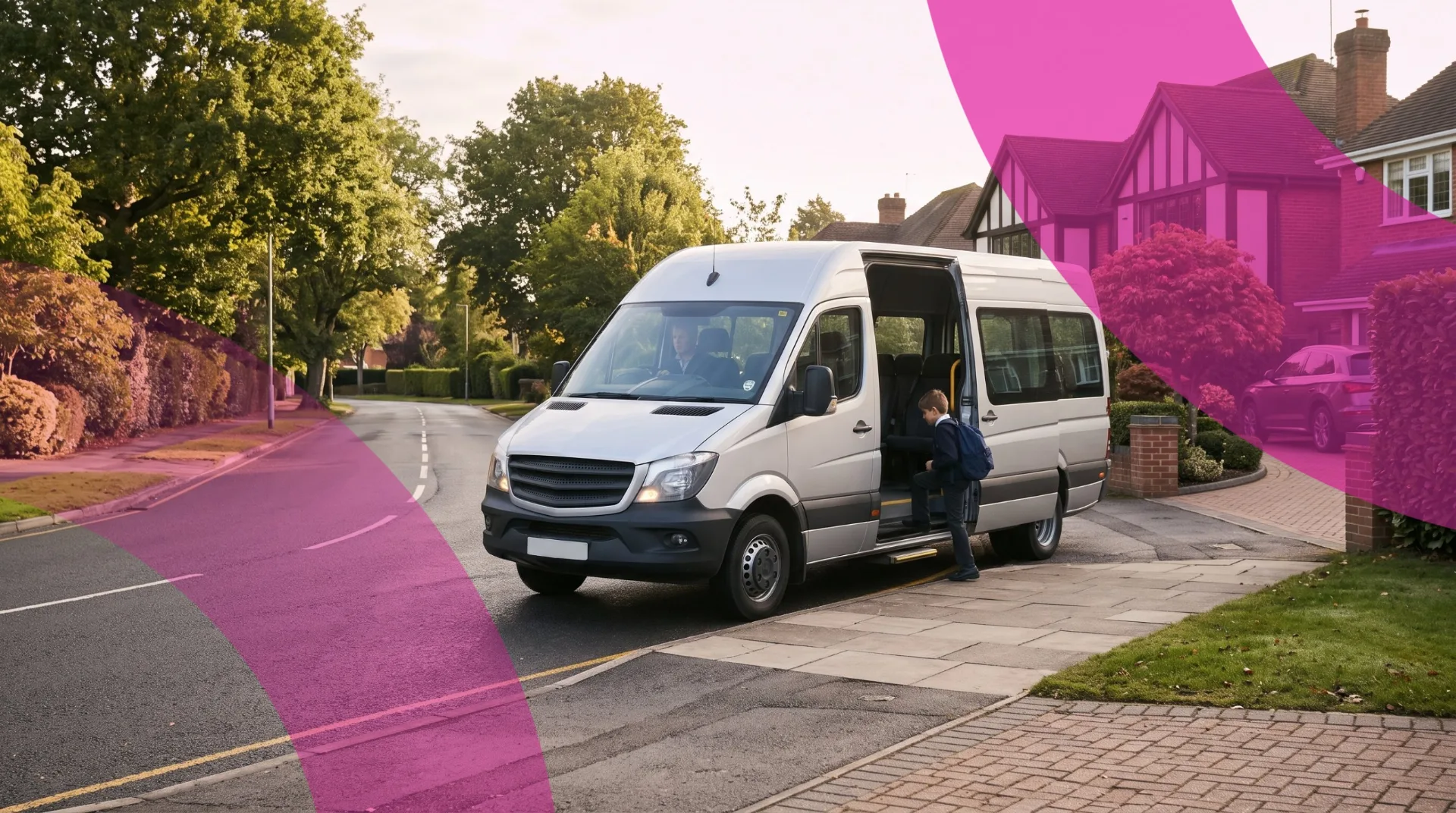
Families choose schools they can get to. For many schools, the quickest way to grow the admissions pool isn't more marketing. It's a better journey to school.
Ask families why they didn't apply, and two answers come up more often than most admissions teams expect: "it was too far" and "we couldn't work out how to get there". A school can have the right curriculum, the right fees and the right reputation, and still lose a family to the school that's 20 minutes closer, or simply easier to reach.
That makes transport an admissions question as much as an operational one. And it's one that admissions teams rarely get asked about.
Location Still Comes First
When Schoolsmith asked parents of Reception-age children why they chose one prep school over another, location (distance from home, or the commute) came top out of 20 reasons. That was in 2016, from 986 parents. When it repeated the survey in 2025 with 941 respondents, location was still first, ahead of fees, results and facilities.
The pattern holds as children get older, but the way they travel changes. Government figures for England show that in 2025, 59% of school trips of five miles or more made by 11- to 16-year-olds were by bus. Families will accept a longer journey if there's a reliable way to make it. Without one, a long journey usually means a parent driving it twice a day, and many families rule out a school before they enquire.
Every School Has Two Catchments
There's the catchment on the map: the area a school thinks it serves. And there's the practical catchment: the area families can reach in a journey time they'll accept, by a route they trust.
The second one is the one that's important for admissions, and transport is what sets it. Extend a route by 15 minutes and a school can reach towns and neighbourhoods it couldn't serve before. Cut a route, or let it become unreliable, and the practical catchment shrinks, even if nothing else about the school has changed.
In many areas, the gap has widened. Rural bus services have been cut back, and many parents are uneasy about young children making long journeys alone on public transport. A dedicated school service, booked online and tracked live, fills that gap. Parents can see where the bus is and know when their child has boarded.
Why Is This Particularly Important Now?
In the UK, the Independent Schools Council's 2026 census counted 3.5% fewer pupils than a year earlier, with the sharpest falls at the main entry points. When fewer families are joining, a school can't rely on the same local pool it always has. Reaching new areas becomes one of the few levers it controls.
International schools face a different pressure. There are now more than 15,000 of them worldwide, and local families drive most of the demand. In cities where several schools compete for the same families, a convenient, safe journey is one of the few differences a family notices every single day.
Transport Is Part of the Admissions Offer
Families want to know how their child will get to school before they apply, not after they've accepted a place. If the answer is hard to find, many won't ask. They'll just choose a school where the answer is obvious.
So the transport offer belongs in the admissions journey from the start:
Five Things Admissions and Transport Teams Can Do Together
Admissions and transport rarely sit in the same meeting. They should, at least once a year, because each holds data the other needs.
For a wider look at what admissions growth is worth, see our ROI report.
Add One Question to Your Enquiry Form
The simplest change most schools can make is to ask, at the first enquiry: "How would your child get to school?", with options such as car, school bus, public transport and walking, plus a postcode or area.
That single answer helps both teams. Admissions can tag families who need transport and make sure they get route information early. Transport can see demand building before the new year starts, not after.
Where Faria Fits into This Conversation
OpenApply and Vectare are separate tools that solve two halves of the same problem.
Vectare helps schools plan, run and fill their transport services. Parents book and pay online and see where the bus is, and schools see who is on every journey. Vectare's transport data analysis maps a school's current network and usage, and identifies competing schools and bus routes within its catchment. For schools without a transport service, it offers a launch package.
OpenApply helps admissions teams turn interest into enrolments. Its geography report shows where enquiring and enrolled families live, source tracking shows which channels and campaigns bring them in, and form answers can tag families automatically, for example those who need transport.
Curious what your own catchment looks like? Vectare can map where your families live against your current routes, so you can see where a new stop would reach. [Request your route map]
Used side by side, they help a school see where demand is, reach it and make it easy for families to join.
For Vectare schools: see how OpenApply turns transport-led demand into enrolments. Book a demo.
For OpenApply schools: [CTA: Explore The School Transport Growth Hub]
Sources
- Schoolsmith, "What do independent school parents want now?", February 2026
- Department for Transport, National Travel Survey 2025: travel to and from school
- ISC Census 2026 infographic
- ICEF Monitor on ISC Research's Global International Schools Snapshot 2026
- Vectare, transport for schools and Faria, Vectare product page
- Independent Education Today, "The need for dedicated transport"