


Every admissions team is preparing for a new intake. Fewer are preparing for the fact that the families arriving are not the families the international schools sector was built to serve. The shift is already well underway, and it changes what a strong admissions process needs to do. The start of the year is the right moment to look at it honestly.
|
Article Summary
|
What Does the Data Actually Show?
International schools began life serving a narrow audience: small communities of expatriates who wanted an English-medium, Western-style education for their children while posted abroad. That is no longer the centre of gravity. The market broadened to include local families, often wealthy, who preferred a school close to home rather than boarding abroad, and who wanted their children's education to lead to a well-respected English-medium university. Source.
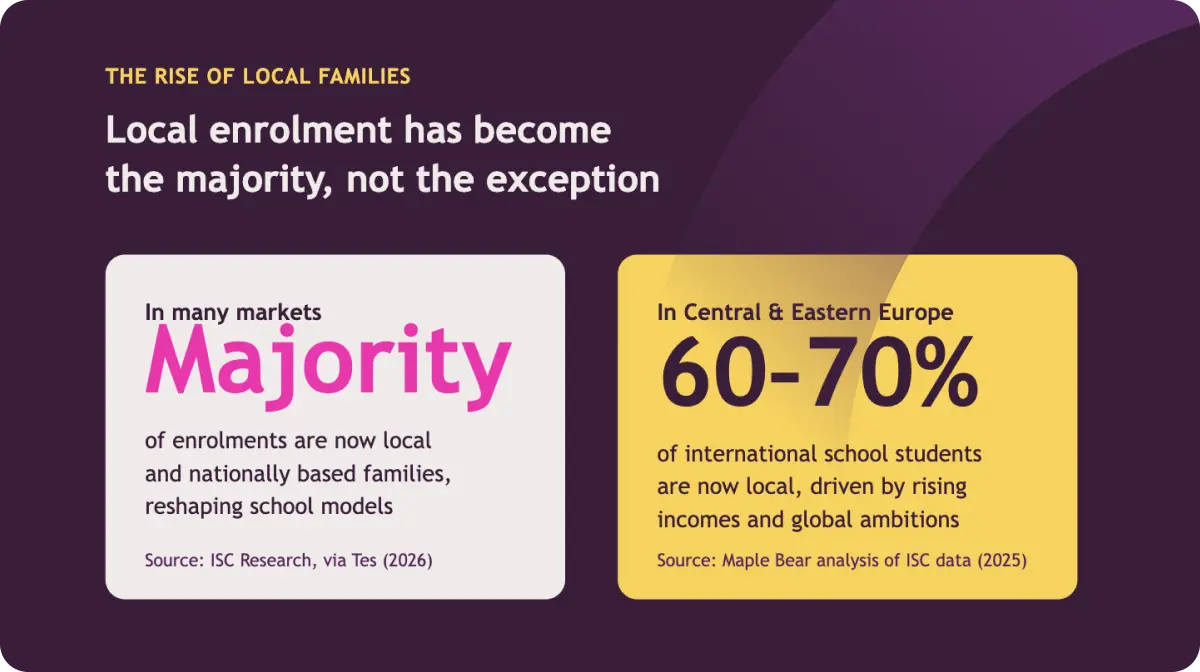
That broadening has now become a majority. One of the key factors heading into 2026 is the growing dominance of local and nationally based families in international schools; in many markets, they already form the majority of enrolments, and this is reshaping school models. In some regions the figures are striking: in Central and Eastern Europe, 60 to 70% of international school students are now local, driven by rising incomes and aspirations for global university pathways.
Why Is a Local Family a Different Admissions Proposition?
An expatriate relocation and a local enrolment are not the same decision, and they do not go through the admissions process in the same way.
An expatriate family is often deciding quickly, under the time pressure of a posting, choosing among a small set of English-medium options, and weighing continuity above almost everything else. A local family is making a long-term investment in their own community, frequently weighing the international school against strong local state and independent alternatives, and asking harder, more searching questions in the process. Curriculum choice, language provision, pastoral care and university guidance are all being recalibrated to balance global pathways with local expectations.
Two consequences follow for admissions specifically. The first is that the decision takes longer and involves more touchpoints. A family choosing for the long term, often without the urgency of a relocation deadline, considers more carefully and comes back with more questions. The admissions relationship has to be sustained over a longer window rather than closed in a fortnight.
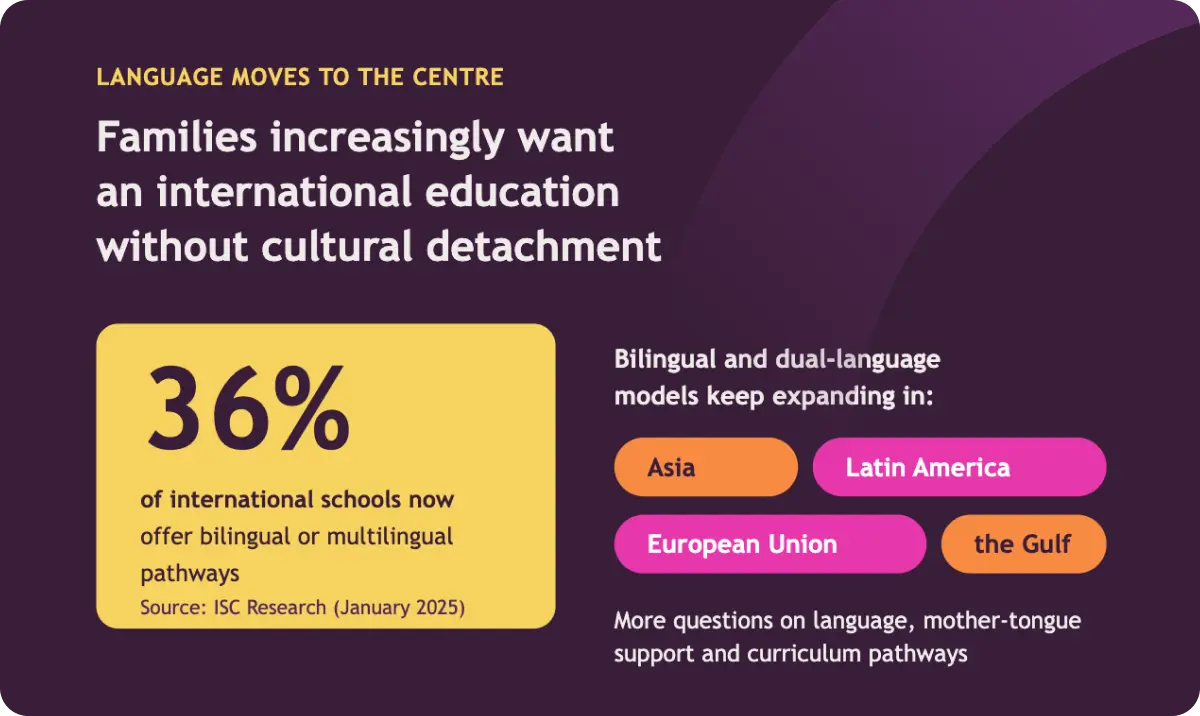
The second is that language and curriculum questions move to the centre of the conversation. As local students come to constitute significant parts of student bodies, schools are offering a more comprehensive multicultural education to cater to that diversity, with 36% now offering bilingual or multilingual pathways. Bilingual and dual-language models continue to expand, particularly in Asia, Latin America, the European Union and the Gulf, as families seek an international education without cultural detachment. An admissions team is now far more likely to be asked detailed questions about language of instruction, mother-tongue support and curriculum pathways, and to need clear, consistent answers ready.
What Does This Ask of Your Admissions Process?
If the applicant has changed, an admissions process built for the old applicant will steadily lose ground. Adapting to the rise of local families means getting a few things right before the season starts.
It means being ready for a longer, more considered journey. When a family takes weeks rather than days to decide, the cost of losing track of them rises. Every unanswered question, every document that slips, every gap in follow-up is a chance for a carefully considering family to drift. The process has to hold a relationship over time, not just process a quick decision.
It means communicating clearly and consistently across more touchpoints. A local family doing thorough research will interact with the school repeatedly before committing. If those interactions live in scattered inboxes and personal threads, the experience feels disjointed at exactly the moment the family is judging the school on how organised and caring it appears.
It means having language and curriculum information ready and consistent. When more applicants ask detailed questions about bilingual pathways and provision, the answers cannot be improvised differently by different people. Consistency signals competence.
And it means being able to see the whole funnel. When the journey is longer and more considered, leadership needs to see where families are in it, which are progressing, which have stalled, and where the process is losing people. Without that visibility, a school cannot tell whether it is winning or losing the families it most wants.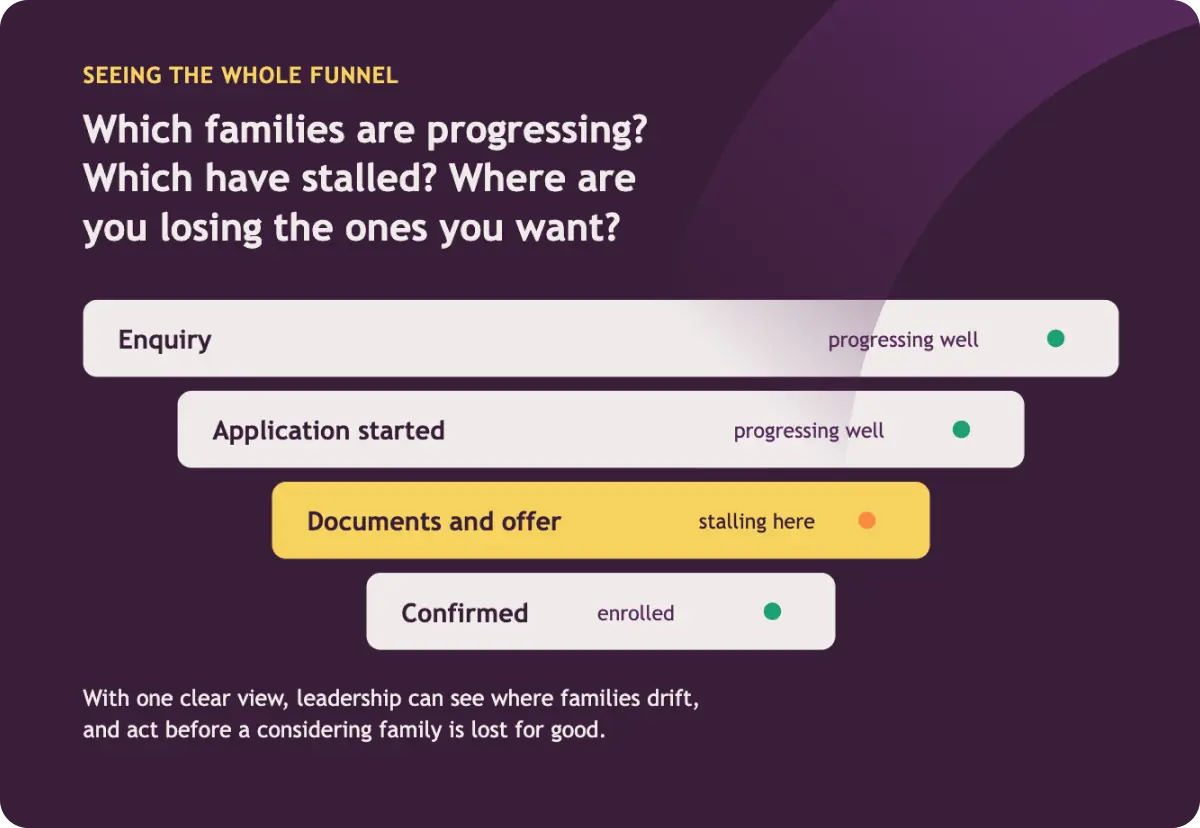
Are You Ready for the Families Who Are Actually Arriving?
None of this requires reinventing admissions. It requires recognising that the families walking through the door are increasingly local, increasingly discerning, and increasingly comparing the school against strong alternatives, and making sure the admissions experience meets them where they are.
That is largely a question of preparation and visibility: a process that sustains a longer relationship, communicates consistently across many touchpoints, answers the harder questions well, and gives leadership a clear view of every family in the funnel. Tools like OpenApply exist to make exactly that possible, bringing enquiries, communication, documents and funnel visibility into one place so that a longer, more considered admissions journey is something a school can manage with confidence rather than chase by hand.
The families arriving this year are not the families of a decade ago. The schools that recognise it and prepare their admissions processes accordingly are the ones that will turn a more discerning applicant into an enrolled and committed one.